





why we use salicylic acid
The Basics
Salicylic acid is an exfoliating acid that dissolves in oil, so it works inside the pore as well as on the surface. It loosens the junctions that hold dead skin cells together, so they shed instead of building up and plugging the follicle. It's also related to aspirin and has some anti-inflammatory activity, reported to be strongest between 0.5% and 5%.1 Expect clearer pores, fewer blackheads and smoother texture.
How does salicylic acid exfoliate?
It was long described as keratolytic, meaning it breaks down keratin. It's now recognised as desmolytic. Salicylic acid pulls apart desmogleins, the proteins inside desmosomes (the cellular rivets that hold skin cells together), so dead cells lose their grip and shed.1
Is salicylic acid a BHA?
It's sold as a beta hydroxy acid (BHA), but the label is technically wrong. In salicylic acid, both the hydroxyl group and the acid group sit directly on a benzene ring.2 The label may have come from marketing, when BHA peels launched while alpha hydroxy acids (AHAs) were popular.1
Salicylic acid vs glycolic acid
Glycolic acid, an AHA, dissolves in water. Salicylic acid dissolves in oil, so it mixes with the skin's own lipids and the sebum inside hair follicles.1 That's what makes it useful for oily skin.2
Does salicylic acid work on acne?
In a randomised trial of 500 people with mild to moderate acne, a 2% salicylic acid gel used once a day matched adapalene gel, a retinoid. After 12 weeks, 51% of the salicylic acid group and 43% of the adapalene group were markedly improved or clear, a difference that wasn't statistically significant.3
How strong can salicylic acid be?
In the EU, most leave-on cosmetics can carry up to 2%, rinse-off hair products up to 3%, and it can't be used in products for children under 3.4 In the US, acne products sold over the counter use 0.5 to 2%.5 Peels done in a clinic go far higher.1
Does salicylic acid cause purging?
Purging hasn't been defined or studied in the clinical research on salicylic acid.
Can you use salicylic acid while pregnant?
On normal skin, absorption of salicylic acid at up to 25% was undetectable, though it depends on the formula, pH, strength and how much is applied. Because so little is absorbed, topical use is considered unlikely to pose a risk to a developing baby. No studies have looked at topical use in pregnancy directly, and absorption can be higher on damaged skin.6 Check with your doctor or midwife before starting any new active.
Salicylic acid for the scalp
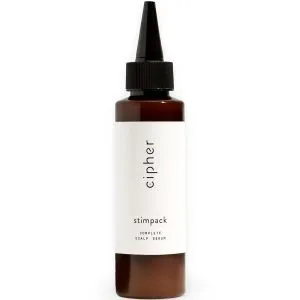
On the scalp it lifts flakes, and it's usually paired with an antifungal. In a 20-person study, a salicylic acid and piroctone olamine gel and cleanser cut the average dandruff score from 2.45 to 1.10 in 4 weeks.7 The scalp trials combine it with an antifungal, so its own share of the result isn't known.
references
- 1 Arif, T. (2015). Salicylic acid as a peeling agent: a comprehensive review. Clinical, Cosmetic and Investigational Dermatology, 8, 455–461. doi: 10.2147/CCID.S84765
- 2 Kornhauser, A., Coelho, S. G., & Hearing, V. J. (2010). Applications of hydroxy acids: classification, mechanisms, and photoactivity. Clinical, Cosmetic and Investigational Dermatology, 3, 135–142. doi: 10.2147/CCID.S9042
- 3 Ye, C. X., Yi, J., Su, Z., Gao, X., Jiang, X., Yu, N., Xiang, L., Zeng, W., Li, J., Jin, H., Liu, W., Zheng, Y., & Lai, W. (2024). 2% supramolecular salicylic acid hydrogel vs. adapaline gel in mild to moderate acne vulgaris treatment: A multicenter, randomized, evaluator-blind, parallel-controlled trial. Journal of Cosmetic Dermatology, 23(6), 2125–2134. doi: 10.1111/jocd.16238
- 4 Commission Regulation (EU) 2019/1966 of 27 November 2019 amending Annexes II, III and V to Regulation (EC) No 1223/2009 on cosmetic products. Annex III, entry 98 (salicylic acid).
- 5 US Food and Drug Administration. Final Administrative Order OTC000013; M006: Topical Acne Drug Products for Over-the-Counter Human Use. Topical Acne Drug Products for OTC Human Use.
- 6 Bozzo, P., Chua-Gocheco, A., & Einarson, A. (2011). Safety of skin care products during pregnancy. Canadian Family Physician, 57(6), 665–667.
- 7 Ge, L., Liu, Z., Xu, S., et al. (2025). A Cohort Clinical Study on the Efficacy of Topical Salicylic Acid/Piroctone Olamine Dandruff Pre-Gel and Cleanser in Improving Symptoms of Moderate to Severe Seborrheic Dermatitis of the Scalp. Journal of Cosmetic Dermatology, 24(1), e16742. doi: 10.1111/jocd.16742
explore more
-
Linolenic Acid

Linolenic acid is an essential omega-3 fatty acid that strengthens the skin barrier, mitigates inflammatory reactions, and balances…
read more → -
Hydroxyphenyl Propamidobenzoic Acid
Hydroxyphenyl Propamidobenzoic Acid (HPPBA) is a lab-engineered oat avenanthramide analogue with powerful anti-inflammatory and soothing properties. Like the…
read more → -
Lecithin
Lecithin is most often derived from soy and functions as an emollient and water-binding agent with skin-restoring abilities.
read more → -
Glyceryl Dioleate
Glyceryl Dioleate is an emollient and surfactant that enhances the texture and stability of skincare formulations while providing…
read more → -
Bisabolol
Bisabolol is a natural monocyclic sesquiterpene alcohol and active constituent of German chamomile. This remarkable, well-studied soothing agent…
read more → -
Gardenia Jasminoides Fruit Extract
Gardenia jasminoides fruit extract is a plant-derived antioxidant and skin-soothing agent that helps protect against oxidative stress while…
read more →