





why we use spirulina maxima (microalgae) extract
The Basics
Spirulina maxima (also known taxonomically as Arthrospira maxima) is a nutrient-dense blue-green microalga, rich in phycocyanin, chlorophyll, essential fatty acids, proteins, vitamins (B-complex, E) and minerals such as iron and zinc. These bioactives provide antioxidant, anti-inflammatory and skin-conditioning benefits. Through advanced sourcing and post-processing, Spirulina maxima can be optimised to create targeted cosmetic actives that support skin resilience, hydration and cellular protection.1
Specialised for Scalp Health
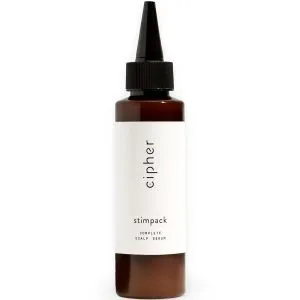
The Spirulina maxima extract in our formulation is obtained via advanced biotechnology to optimise its active profile for scalp health and hair vitality. Combined with Chlorella emersonii, it offers a synergistic effect that targets hair density, strength and overall scalp balance. The extract is encapsulated in a lecithin-based delivery system to ensure stability, bioavailability and effective deposition at the scalp surface.2
How it works:
- Reinforces the scalp barrier and supports a balanced micro-environment—foundations for sustained follicle function.
- Reduces oxidative stress and day-to-day environmental insult, helping protect follicles from free-radical damage linked to thinning and greying.
- Supports fibre density and anchoring, promoting better retention and resilience over time.
Science + Mechanisms
On a scalp that’s light-exposed and naturally lipid-rich, oxidative reactions and inflammatory signalling can encourage follicles let go of hair prematurely.
Phycocyanin—the hallmark chromoprotein of S. maxima—provides potent antioxidant support and helps activate the cell’s own defences via the KEAP1–NRF2–HO-1 axis.8 These actions mean more stable barrier lipids, less stress signalling, and better protection for follicle and pigment cells. The mechanisms below outline how phycocyanins deliver those benefits.
- Redox defence (NRF2-linked): engages the KEAP1–NRF2–HO-1 pathway to upregulate cytoprotective enzymes and bolster intrinsic antioxidant capacity.8
- Reactive-species neutralisation: directly scavenges reactive oxygen and nitrogen species, helping limit lipid peroxidation in the scalp’s sebum-rich setting and reducing stress on follicle structures.6,8
- Comfortable scalp environment: by lowering oxidative load, helps keep signalling less reactive and supports an environment more conducive to retention and density over time.6,8
- Delivery optimisation (lecithin): lecithin encapsulation enhances aqueous dispersion and barrier compatibility, improving local delivery at the follicular opening.7
- Systems approach: pairs with G. emersonii (chlorella) xanthophylls—phycocyanin’s NRF2-centred defence complements carotenoid-driven membrane protection from chlorella-derived xanthophylls for broader coverage of scalp stressors.3,5,8
Clinical Efficacy
Clinical trials completed by the manufacturer of the active demonstrated the following results:
- 11.43% increase in hair density within five months of use.2
- Over 10,200 new hairs after consistent application over five months.2
- Hair growth four times faster compared with traditional epidermal growth factor (EGF) treatments.2
- +26.7% scalp moisturisation, supporting a healthier environment for growth.2
This microalgae-sourced active supports scalp comfort and visible density for stronger, fuller-looking hair.
references
- 1 Ragusa, I., Nardone, G. N., Zanatta, S., Bertin, W., & Amadio, E. (2021). Spirulina for Skin Care: A Bright Blue Future. Cosmetics, 8(1), 7. doi:10.3390/cosmetics8010007
- 2 ALGAKTIV®. (2024). Densidyl Leaflet 202407. Retrieved from ALGAKTIV® proprietary data.
- 3 Makuch, K., Hryc, J., Markiewicz, M., & Pasenkiewicz-Gierula, M. (2021). Lutein and Zeaxanthin in the Lipid Bilayer—Similarities and Differences Revealed by Computational Studies. Frontiers in Molecular Biosciences, 8, 768449. doi:10.3389/fmolb.2021.768449
- 4 Ahn, Y.-J., et al. (2021). Lutein as a Modulator of Oxidative Stress–Mediated Inflammatory Diseases: Implication of Nrf2/HO-1. Antioxidants, 10(10), 1438.
- 5 Zerres, S., & Stahl, W. (2020). Carotenoids in Human Skin. Biochimica et Biophysica Acta (BBA) – Molecular and Cell Biology of Lipids, 1865(11), 158588. doi:10.1016/j.bbalip.2019.158588
- 6 Trüeb, R. M. (2009). Oxidative Stress in Ageing of Hair. International Journal of Trichology, 1(1), 6–14. doi:10.4103/0974-7753.51923
- 7 Ricci A, Stefanuto L, Gasperi T, Bruni F, Tofani D. Lipid Nanovesicles for Antioxidant Delivery in Skin: Liposomes, Ufasomes, Ethosomes, and Niosomes. Antioxidants. 2024; 13(12):1516. DOI: 10.3390/antiox13121516
- 8 Liu, R.-Z., Li, W.-J., Zhang, J.-J., Liu, Z.-Y., Li, Y., Liu, C., & Qin, S. (2022). The Inhibitory Effect of Phycocyanin Peptide on Pulmonary Fibrosis In Vitro. Marine Drugs, 20(11), 696. doi:10.3390/md20110696 The Inhibitory Effect of Phycocyanin Peptide on Pulmonary Fibrosis In Vitro.
explore more
-
Linoleic Acid

Linoleic acid is an essential omega-6 fatty acid that strengthens the skin barrier, regulates sebum production, calms inflammatory…
read more → -
Hydroxypropyltrimonium Hyaluronate
Hydroxypropyltrimonium Hyaluronate is a cationic hyaluronic acid designed for long-lasting hydration and barrier support. Its positively charged structure…
read more → -
Gluconolactone
Gluconolactone is a polyhydroxy acid (PHA) celebrated for its multifaceted benefits beyond gentle exfoliation. Gentle and hydrating, it…
read more → -
Propyl Gallate
Propyl Gallate, a derivative of antioxidant gallic acid, is used in small amounts to stabilize sensitive active ingredients…
read more → -
Diglucosyl Gallic Acid
An innovative biotech molecule activated by the skin's microbiome. It acts on seven biological targets to visibly brighten,…
read more → -
Beta Glucan
Beta glucan is a polysaccharide sugar commonly derived from yeast or oats. It has anti-redness, anti-irritant and antioxidant…
read more →